
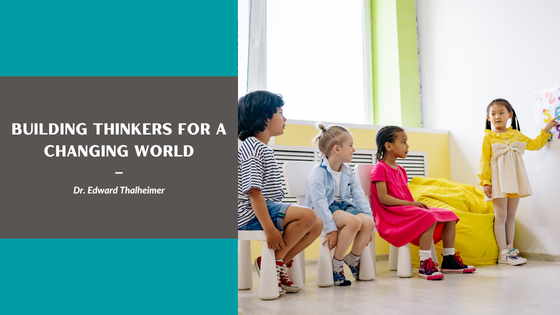
Academic achievement is an important part of a child’s educational journey, but education is about more than grades and test scores. Some of the most valuable skills children develop cannot be measured by a report card: knowing how to ask questions, solve unfamiliar problems, make decisions, and think independently.
As children grow, these abilities can become just as important as the information they learn in the classroom.
Curiosity Before Answers
Children are naturally curious. They ask why, how, and what might happen next. Encouraging that curiosity can help transform learning from something they are expected to complete into something they actively want to explore.
Instead of immediately providing every answer, parents and educators can sometimes encourage children to think through a problem themselves. Even when their first attempt is incorrect, the process of considering possibilities can help develop confidence and persistence.
Making Room for Mistakes
A child who is afraid of getting something wrong may become hesitant to try something unfamiliar. Yet mistakes are a natural part of learning.
Creating an environment where children can make mistakes without feeling defined by them gives them room to experiment. Whether they are struggling with a difficult math problem, learning an instrument, playing a sport, or working on a creative project, setbacks can become opportunities to reflect and try again.
The goal is not to eliminate mistakes, but to help children become comfortable learning from them.
Learning Beyond the Classroom
Independent thinking also develops through experiences outside traditional academics. Reading for pleasure, playing games, participating in sports, exploring creative interests, and engaging in extracurricular activities can all present children with opportunities to make choices and solve problems.
These experiences allow children to discover what interests them and gradually develop confidence in their own abilities.
Asking Better Questions
In a world where information is increasingly easy to access, knowing the answer is only part of learning. Knowing what questions to ask can be equally valuable.
Children can be encouraged to look beyond the first explanation they encounter, consider different perspectives, and connect ideas from different subjects. These habits can help them become more thoughtful learners while preparing them for situations where there may not be a single obvious answer.
Preparing for a Lifetime of Learning
The ultimate purpose of education may not be to prepare children for the next test or school year. It is to give them the confidence and skills to keep learning as the world around them changes.
A child who develops curiosity, resilience, creativity, and independent thinking carries those qualities far beyond the classroom.
Good grades can reflect what a student has learned. But the ability to keep asking questions, embrace challenges, and discover solutions independently can shape who that student becomes. That is why education at its best is not simply about creating successful students—it is about helping children become confident, capable, lifelong learners.
Dr. Edward S. Thalheimer is the President and Founder of The Tutoring Center® Franchise Corp. For our part, we here at The Tutoring Center® are continuing to provide one-to-one instruction combined with The Rotational Approach to Learning® to prevent children from slipping through the cracks academically. Our programs help children achieve long-term success, build concentration and focus, and, with our outstanding instructors, find the love of learning. Don’t let your child fall behind this school year. If you’re interested in learning more, or you are interested in opening The Tutoring Center® in your community and joining a team of more than 120 franchise locations nationwide, please visit our website at TutoringCenter.com