
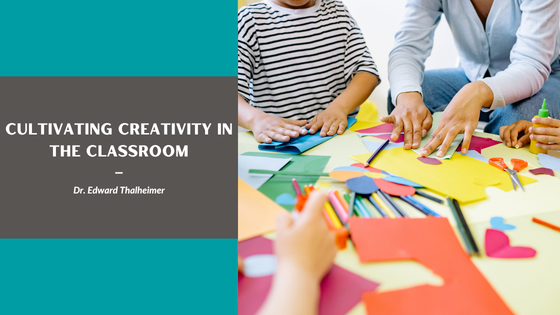
Creativity is an important part of learning, giving students opportunities to explore ideas, ask questions, and approach challenges in different ways. While creativity is often associated with art, writing, or music, it can be valuable across every area of the classroom.
Creating space for imagination does not require completely changing how students learn. Small opportunities to explore, experiment, and think independently can make everyday lessons more engaging while helping students develop confidence in their own ideas.
Making Room for Imagination
Classrooms can encourage creativity by giving students opportunities to think beyond a single expected answer. Open-ended questions, discussions, brainstorming activities, and projects can invite students to consider different possibilities and explain their thinking.
Even a familiar lesson can become an opportunity for exploration when students are encouraged to ask “what if?” and consider how a concept might apply in a new situation.
Learning Through Exploration
Creativity often develops through experimentation. Giving students opportunities to try different approaches allows them to discover what works, reconsider their ideas, and learn from the process.
Projects can be particularly useful for this. Whether students are designing something, developing a presentation, writing a story, or exploring a real-world problem, the process can encourage curiosity and independent thinking.
The emphasis does not always need to be on producing a perfect final result. The exploration itself can be an important part of learning.
Connecting Different Ideas
Some of the most interesting ideas emerge when students make connections between subjects. A history lesson might inspire a creative writing exercise, while a science topic could become the starting point for a design project.
Cross-curricular activities can help students see that knowledge does not always exist in separate categories. Instead, ideas from different subjects can inform and strengthen one another.
This approach can also help students recognize their individual interests and find different ways to engage with a topic.
Creating a Supportive Environment
Students are more likely to share their ideas when they feel comfortable asking questions and making mistakes. A supportive classroom environment can make experimentation feel like a natural part of learning.
Teachers can encourage this by showing interest in different perspectives, asking students to explain their reasoning, and treating mistakes as opportunities to reconsider and learn.
Not every idea needs to become a successful project. Having the confidence to contribute an idea in the first place can be an important part of creative development.
Helping Creativity Grow
Creativity does not have to be a separate activity added to an already busy school day. It can be incorporated into everyday learning through questions, discussions, projects, collaboration, and opportunities for choice.
When classrooms make room for imagination, students can develop more than creative skills. They can learn to approach problems with curiosity, consider different perspectives, communicate their ideas, and remain open to new possibilities.
Cultivating creativity is ultimately about creating an environment where students have the space to wonder, explore, and discover what they can do with their ideas.
Dr. Edward S. Thalheimer is the President and Founder of The Tutoring Center® Franchise Corp. For our part, we here at The Tutoring Center® are continuing to provide one-to-one instruction combined with The Rotational Approach to Learning® to prevent children from slipping through the cracks academically. Our programs help children achieve long-term success, build concentration and focus, and, with our outstanding instructors, find the love of learning. Don’t let your child fall behind this school year. If you’re interested in learning more, or you are interested in opening The Tutoring Center® in your community and joining a team of more than 120 franchise locations nationwide, please visit our website at TutoringCenter.com